■ System Introduction
The system supports the visual display of communication parameters for the entire station, dynamic display of virtual circuits, online monitoring of protection devices, merging units, intelligent terminals, switches, and other functions such as switching on and off soft pressure plates, switch input, SV output, alarm and locking contact information status. It also monitors the process layer network port light intensity, device working voltage, switch input voltage, outlet relay working voltage, internal working temperature, port message flow, error message statistics, supports safety measure verification and warning for protection maintenance and operation, supports SCD model control, SCD file visualization, and supports message capture and analysis functions for SV/GOOSE.
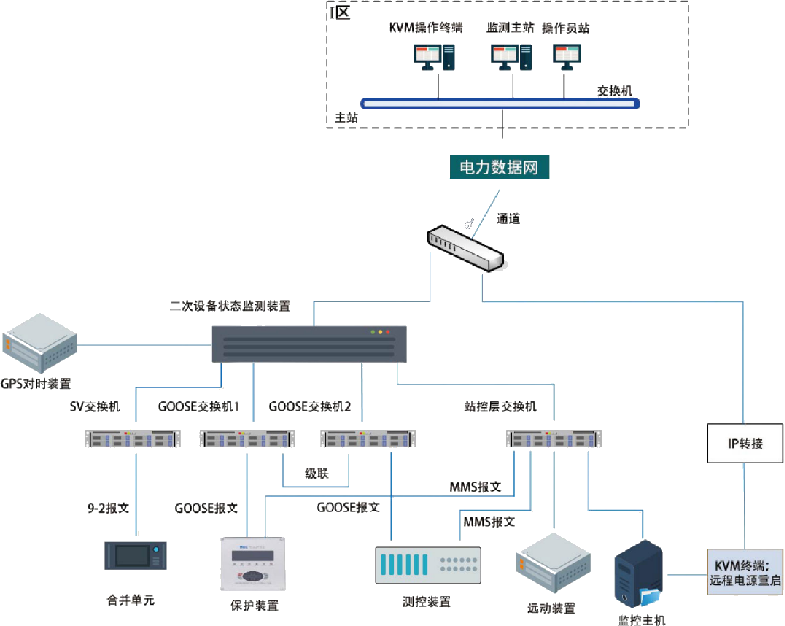
The system consists of a secondary equipment status monitoring device deployed in the substation and a main station deployed on the dispatch side. The secondary status monitoring device collects status information such as servers, switches, protection and measurement devices (mainly operating temperature monitoring and communication messages), and temperature inside the cabinet in the station. The remote main station connects to the secondary status monitoring device in the station through the power communication network, realizing unified collection, storage, and advanced application analysis of online monitoring data of secondary equipment in the station. It can also maintain and operate the station servers through auxiliary equipment such as KVM and remote controllable power switches.
■ System composition
Secondary equipment online monitoring device, KVM device, remote power management terminal, switch, measurement and control device (temperature acquisition)
System Features
The data acquisition device integrates data acquisition, storage, and intelligent diagnosis, with data cycle coverage. It can record and save historical data for no less than 300 days, and the hardware time scale resolution of data recording is less than 40ns.
System architecture diagram