■ System Introduction
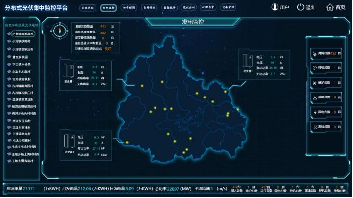
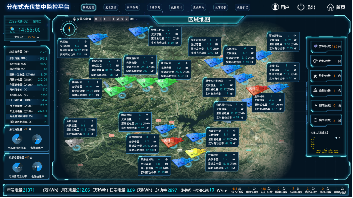
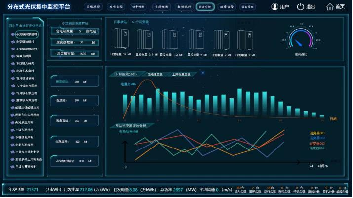
The system is designed based on the B/S architecture, integrating functions such as status monitoring, fault location, intelligent alarm, report statistics, and intelligent analysis. It can monitor the operation status of key equipment such as battery components, combiner boxes, inverters in real time, and rely on intelligent analysis technology to compare and display the overall operation efficiency of each device in multiple dimensions, helping managers to comprehensively grasp the operation status of each site. At the same time, the system adopts advanced fault location technology, which can quickly locate the fault point, help operation and maintenance personnel to quickly complete on-site defect elimination work, and improve operation and maintenance efficiency.
The system achieves data quality governance through technologies such as big data analysis and artificial intelligence, thereby improving the effective perception and accurate power prediction capabilities of distributed photovoltaics. At the same time, by combining microgrids, energy storage and other carriers, multi-level collaborative control is achieved to enable distributed photovoltaics to quickly support and respond to grid frequency and voltage, thereby deepening the application of source grid load storage collaborative control, expanding multiple modes of distributed photovoltaics such as precise control, load aggregation regulation, regional energy coordination control, etc., achieving observability, measurability, adjustability and controllability of distributed photovoltaics, and promoting the transformation of the power grid to a "source load interaction" mode.
■ System architecture
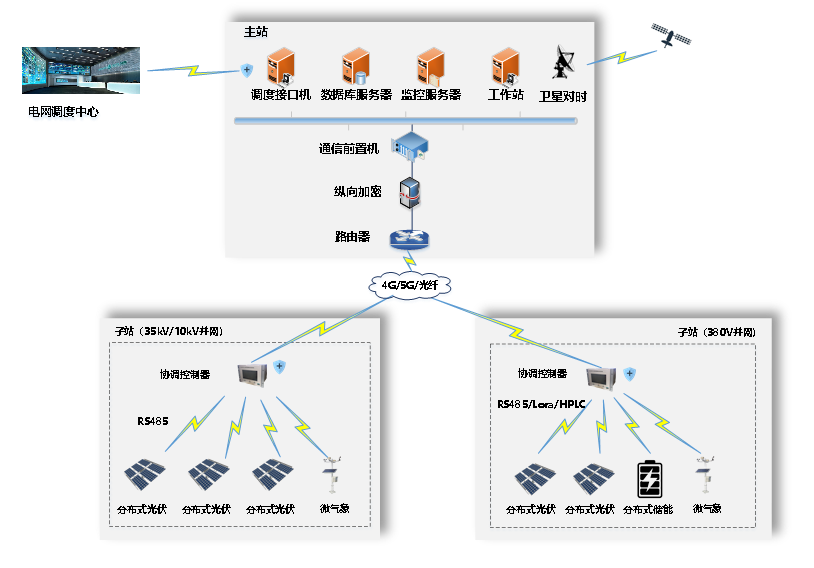
■ System functions
◆ Main station side
(1) Data information reception and processing
• Realize the reception of relevant data from various distributed photovoltaic substations, including but not limited to: operation data of grid connection points, inverters, combiner boxes, protection, real-time radiation, environmental temperature and humidity, and other micro meteorological data;
• Supports multiple mainstream communication protocols such as power and IoT, and supports data disconnection compensation;
• Support real-time storage of data (seconds or more);
Support functions such as data processing, scientific computing, and statistics.
(2) Power control
Capable of receiving power regulation instructions from power grid dispatch. Simultaneously supporting multiple operation modes of manual and planned curves;
• Implement optimized scheduling of power between sub stations;
• Implement remote switching and power regulation for each substation;
Support distributed group adjustment and control, realizing distributed photovoltaic automatic power generation control and automatic voltage control.
(3) Advanced Services
• Operation analysis: power generation analysis, abnormal power generation analysis, power quality analysis, year-on-year and month on month analysis, peak valley analysis, power generation trend analysis. Analysis of voltage qualification rate, etc;
• Power forecasting and load forecasting.
◆ Sub station side
(1) Data collection
Realize the collection of data for inverters, measurement and control protection devices, smart meters, and other devices managed within the substation;
The local bus supports Ethernet, serial port, HPLC, Lora and other interfaces, and supports protocols such as Modbus RTU/TCP, IEC 104, etc;
• It has the edge computing function of original data summary and calculation;
• Supports second level data upload and historical data summoning.
(2) Active and reactive power control
• Support active/reactive power regulation of distributed photovoltaic substations;
• It can directly issue active/reactive power regulation instructions to the inverter to achieve power regulation;
• Power control in the substation can be achieved by opening/closing the switches of distributed photovoltaics;
Support distributed energy storage and flexible load regulation.
(3) Local monitoring
• Support local monitoring of distributed photovoltaic substations;
• Support local start stop of distributed photovoltaic substations.
■ System interface